

August 19, 2026
Envol Biomedical is expanding its in-house bioanalytical capabilities to give sponsors a more integrated path from complex preclinical studies to the data required to advance development programs.
Successful preclinical development requires much more than access to the right animal model or the ability to execute a toxicology protocol. Sponsors ultimately need to understand what happened during a study, how a therapeutic behaved, how the biological system responded, and whether the resulting data provide the evidence needed to make the next development decision- file IND (Investigative Drug) which is the key step for the new medicine to be examined in clinical trial after FDA approval.
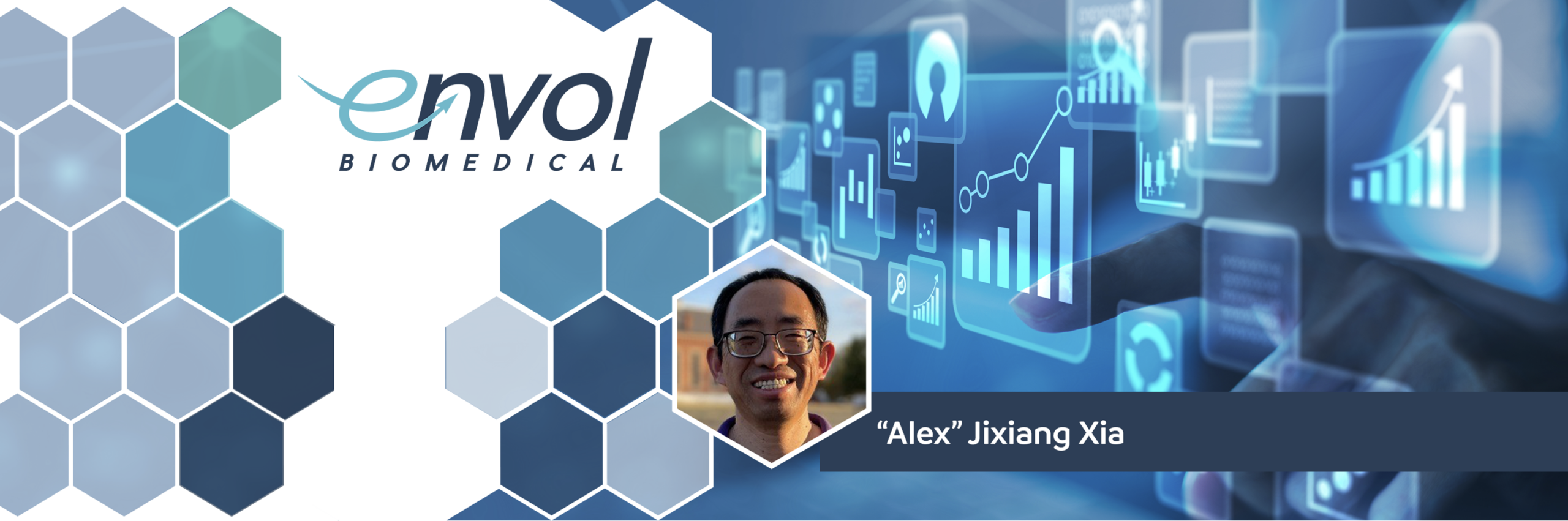
That is why Envol Biomedical is continuing to expand the scientific capabilities surrounding its core preclinical research platform. A significant part of that effort is being led by Jixiang Xia, PhD, also known as Alex, who has joined Envol as Bioanalysis Laboratory Manager.
Xia brings more than five years of industry bioanalytical experience to Envol, along with a PhD in Biochemistry and Molecular Biology. His experience includes preclinical and clinical pharmacokinetics (PK), Biomarkers, anti-drug antibody (ADA) assay development and other bioanalytical work supporting therapeutic development. Prior to joining Envol, he served as a Study Director within the bioanalysis team at Northern Bio, where his work focused particularly on ADA and pharmacokinetic analysis for large-molecule therapeutics.
Now, his focus is on helping Envol build something larger: a robust internal bioanalytical platform designed to complement the organization’s established preclinical capabilities.
Bringing Bioanalysis Closer to the Study
Envol has built a distinctive position within preclinical research through its extensive nonhuman primate resources, experienced study directors and growing capabilities supporting complex pharmacology and toxicology programs. Alex saw an opportunity to complement those strengths by developing an expanded bioanalytical platform within the organization.
The objective is to give sponsors access to more of the scientific capabilities required to generate a comprehensive preclinical data package through a single research partner.
The capabilities being developed and expanded include PK analysis, ADA testing, blood immune cell profiling and characterization, biodistribution and gene expression analysis by quantitative polymerase reaction qPCR and quantitative reverse transcriptase PCR qRT-PCR, among other bioanalytical applications. Alex also brings particular experience with bioanalysis of protein-based therapeutics, including antibody drugs, peptide therapeutics and enzyme-related therapies, as well as qPCR approaches that can support safety assessment of cell and gene therapy programs.
For sponsors, the value extends beyond adding another laboratory service. Integrating bioanalysis more closely with the broader preclinical program creates opportunities for scientists, study directors, veterinarians, quality personnel and sponsors to collaborate around the same scientific questions from the beginning.
Alex sees that collaboration as fundamental to producing useful data.
“Nothing can be achieved without all these colleagues involved,” he explained during his recent discussion about the new role. Effective collaboration among the different scientific disciplines, together with communication with the sponsor and oversight from Quality Assurance, is critical to generating high-quality data.
More Than Executing a Protocol
One of the recurring themes throughout Alex’s career has been that no two sponsor programs arrive at a CRO with exactly the same needs.
Some sponsors come with highly developed protocols and a clear understanding of the endpoints they need to evaluate. Others may have a promising therapeutic and substantial scientific knowledge but still need help determining the best way to translate their questions into an effective preclinical program.
That distinction influences how Alex approaches the CRO-sponsor relationship.
Rather than simply accepting a protocol and executing it, he believes a valuable scientific partner should understand the broader literature, emerging technologies and scientific context surrounding a sponsor’s program. That means discussing what the sponsor is ultimately trying to learn and helping determine whether the proposed study design and analytical methods are positioned to answer those questions.
As Alex described it, the relationship requires “more communications” and “more discussions” rather than a one-way transaction.
For particularly difficult or unusual programs, he routinely examines scientific literature and publications surrounding the therapeutic area and uses that information as part of the discussion with sponsors. The goal is to contribute ideas that can help refine protocols and corresponding methods before the study is underway.
That philosophy aligns closely with Envol’s broader approach to complex preclinical development: access to resources matters, but scientific collaboration determines how effectively those resources are used.
Expanding the Scientific Questions Envol Can Answer
Alex’s arrival also expands the range of programs and therapeutic areas that Envol can support through deeper bioanalytical expertise.
He sees particular opportunities in neuroscience, oncology and immunological diseases, as well as programs involving antibodies and/or their conjugates (ADC) and other large-molecule therapeutics. Cell and gene therapy represents another important opportunity, particularly where qPCR/qRT-PCR and related techniques can help sponsors evaluate target-gene quantification due to its high sensitivity feature
These capabilities become particularly powerful when combined with Envol’s existing nonhuman primate infrastructure.
Envol maintains substantial on-site NHP resources across multiple species, allowing study teams to address different sponsor requirements without relying entirely on the external sourcing process that can create availability, scheduling and cost challenges elsewhere in the industry. Alex sees that infrastructure as an important advantage, but also as the foundation upon which additional scientific capabilities can be built.
By connecting bioanalysis more directly with toxicology, pharmacology, veterinary expertise and other specialized capabilities, Envol can increasingly support the continuum of questions that arise during a complex preclinical program.
Toward a More Integrated Path to IND
Ultimately, Alex’s vision for Envol’s bioanalysis program is straightforward: make it easier for sponsors to obtain the high-quality, complementary data they need to move promising therapeutics forward.
The bioanalysis team is currently expanding its equipment, instrumentation and service repertoire, with the longer-term goal of developing a robust platform capable of supporting increasingly sophisticated programs and ultimately advancing toward GLP-level bioanalytical capabilities.
Alex hopes that the team itself will grow alongside those capabilities, adding scientists and expertise that allow Envol to support a wider variety of programs efficiently.
The result is an important step in Envol’s continued evolution. A sponsor conducting a preclinical program should not have to think of toxicology, pharmacokinetics, immunogenicity, biodistribution and other analytical endpoints as disconnected activities. They are pieces of the same scientific story.
Bringing those pieces together can improve communication, provide greater scientific continuity and help development teams build the comprehensive data packages needed to support critical decisions and, ultimately, IND submissions.
For Alex, that is what makes his new role exciting. He is not simply joining an existing laboratory. He is helping build a capability around Envol’s established preclinical resources that can make the organization a more complete scientific partner for sponsors.
For Envol’s customers, that means gaining another experienced scientist at the table, another set of capabilities within reach, and a more integrated approach to answering the difficult questions that determine what happens next.